TUESDAY, 27-OCT-26 11:36
TUESDAY, 27-OCT-26 11:36
Welcome to Rock Imaging Special Interest Group
The Rock Imaging Special Interest Group (RISIG) brings together academics, researchers, imaging equipment manufacturers, software and ML/AI specialists, end user geologists, geoscientists and engineers, professionals and students to share ideas, experience and know-how on all modes of rock imaging, across all scales from planets to pores.
RISIG is now a registered charity under the control of its elected Trustees. It's mission is to promote the science and technology of any mode of rock imaging including the processing of such data and its interpretation to better determine rock properties.
A central part of RISIG's responsibility is to run an annual conference where members can attend presentations on the innovation and research in rock imaging methodologies and on the application of rock imaging techniques. The annual meeting also serves to bring together academia and businesses having interests in rock imaging for the sharing and transfer of ideas and expertise and to direct and fund future research activity.
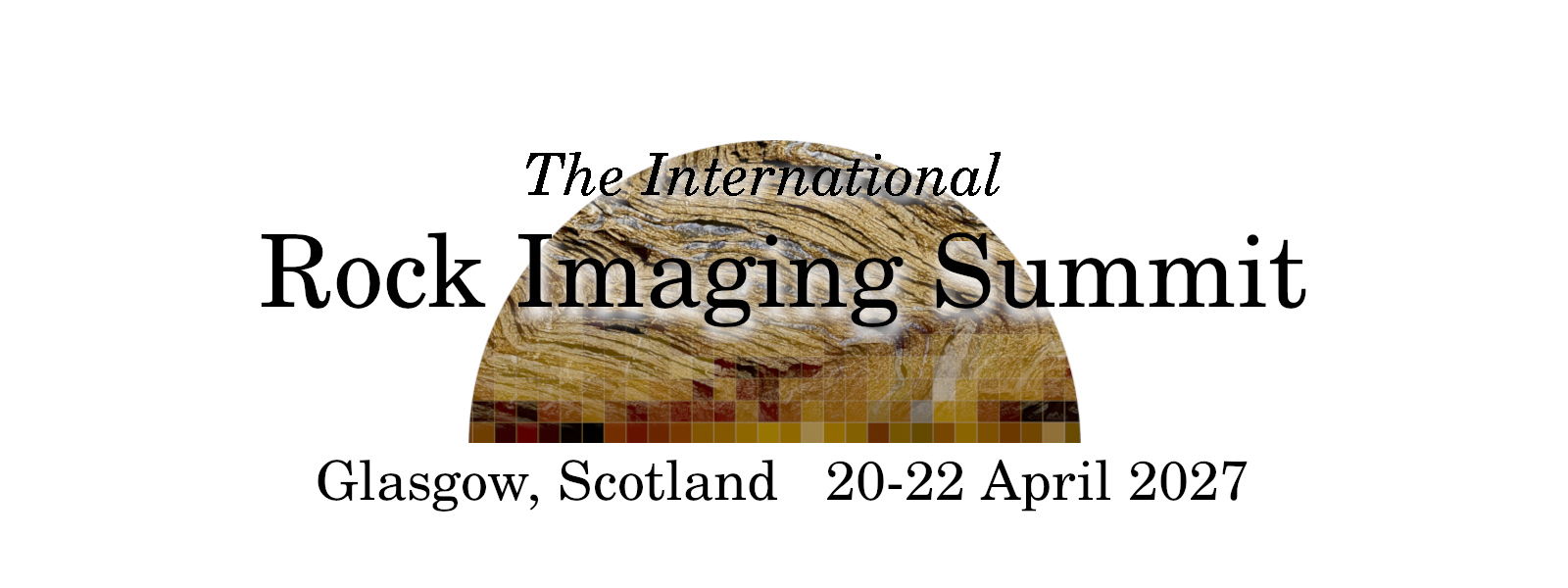
The 7th International Rock Imaging Summit - iRIS-2027 - will be held 20-22 April 2027 at the University of Glasgow, Scotland.
For the last six years, participants have praised the quality of the technical program and valued the opportunity to meet and exchange ideas with like-minded geoscientists: researchers, innovators and application experts. RISIG offers opportunities for new ideas to be shared with an appreciative audience, for academics to present their latest research, for businesses to identify potential academic partners, for companies to introduce their rock imaging equipment, and for investors to discover rock imaging start-ups.
We will shortly be issuing the Call for Abstracts and sharing the Sponsorship Prospectus. We will also be inviting applications from companies interested in exhibiting at the event. Watch out for our next communication!
For details, please email: iris-2027@rockimaging.org